
Your Meetings Aren't Collaboration — They're Group Therapy (And AI Can Fix That)
Created by: Gian Carlo Val Ebao 4min read
June 24, 2026
Most of your meetings aren't collaboration — they're group therapy sessions where everyone takes turns explaining what they already know.
Think about it. How many "alignment meetings" have you sat through where the actual outcome was… someone finally understanding what another participant meant three weeks ago? How many "decision meetings" ended with "let's take this offline" because two people couldn't stop talking past each other?
Here's the dirty secret about collaboration in multi-team environments: the work isn't hard. The convincing is.
You've got five teams building one product. Each team sees the requirements through their own lens — Juan thinks it's a data modeling problem, Jose thinks it's a UX problem, Pedro thinks everyone's ignoring the "point" of the problem, and Edgar thinks everyone's just reckless. Everyone's right, by the way. They're just right about different slices of the same elephant.
And so you meet. And meet again. And the meetings aren't really about making progress — they're about paying the persuasion tax: the time it takes to get everyone exposed to perspectives they didn't have when they walked in.
What if you just... didn't have to pay that tax?
AI as Your Pre-Game Coach (Devil's Advocate)
Here's a scenario you've lived: you have a proposal. You've thought it through. You walk into the meeting, present it, and immediately get hit with three objections you didn't see coming. You spend 40 minutes defending instead of deciding. The meeting ends with "good discussion, let's revisit next week."
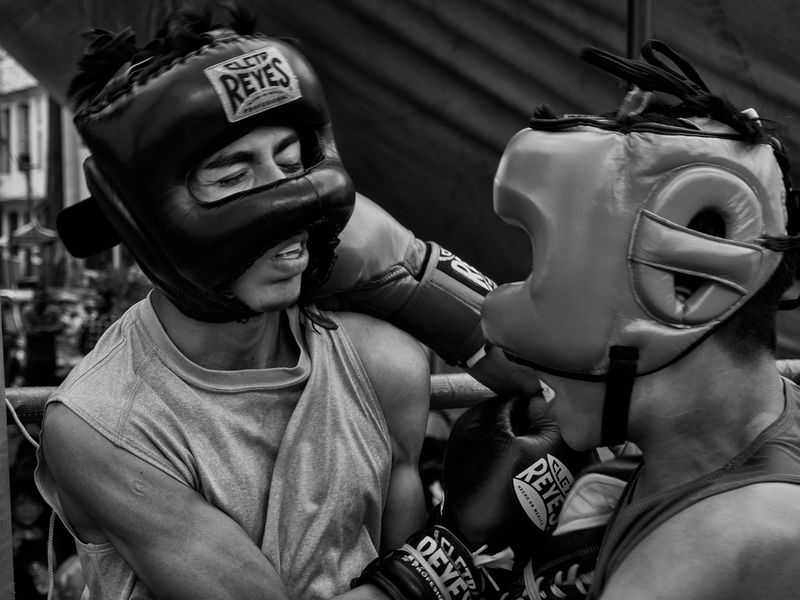
The fix isn't being smarter. It's being more prepared. And this is where AI stops being "that thing that writes my emails" and starts being genuinely useful.
Level 1: Poke my holes.
Before your next architecture proposal or design decision, dump your thinking into AI and say: "Here's what I'm proposing and why. What am I missing? What assumptions am I making that I haven't justified?"
It's like having a sparring partner who's read every software engineering blog ever written and has zero ego invested in being right. It'll surface the gaps you can't see because you've been staring at the problem too long.
Level 2: Be my toughest critic.
This is where it gets fun. Tell AI: "Pretend you're the enterprise architecture team reviewing this proposal. What are your concerns?" Then switch: "Now you're the security team. Tear this apart."
You're not just finding holes anymore — you're rehearsing the actual conversation. You're hearing the objections in the voice of the people who'll raise them. By the time you walk into that room, you've already had the argument three times. Nothing surprises you.
Level 3: What would the review board reject?
Every organization has some version of a governance body — an architecture review, a solutions board, a technical assessment committee — that will eventually ask "why did you choose this?" If you can't answer that clearly, you're getting sent back.
So ask AI: "If a review board were evaluating this decision, what gaps would they flag? What evidence would they want to see? What alternatives would they expect me to have considered?"
Now you're not just prepared for the meeting. You're prepared for the meeting about the meeting. You've pre-built your decision rationale before anyone even asked for it.
The point isn't that AI makes you smarter. The point is that showing up prepared changes the entire dynamic of the room. When you've already stress-tested your thinking, meetings stop being defense sessions and start being actual collaboration — people building on ideas instead of poking holes in them for the first time.
The quality of every meeting is determined before anyone joins the call.

AI as Judge & Translator (The Cycle-Breaker)
You know the cycle. Every project has it:
- Analysis paralysis — Five smart people staring at a whiteboard, each convinced their approach is the sane one. Nobody commits because nobody wants to be the person who chose wrong.
- Relitigating the dead — Someone raises a concern that was addressed three sprints ago. But because the rationale was never captured (or captured in a Confluence page that's now three levels deep in an abandoned space), the team spirals back into the same debate.
- Over-engineering out of fear — Teams add layers of complexity not because the problem demands it, but because they're preemptively defending against objections they imagine a review board might raise.
These three feed each other. You can't decide, so you revisit old ground, which makes everyone defensive, so they over-engineer, which creates more to debate, and suddenly you're back at step one with a more complicated version of the same problem.

AI breaks this cycle not by making decisions for you, but by making your own decision visible to you.
The Translator move:
When people are talking past each other, it's rarely because someone is wrong. It's because they're using the same words to mean different things, or solving for different constraints without realizing it.
Feed AI the perspectives: "Participant A is proposing X because of [their constraints]. Participant B is proposing Y because of [their constraints]. Where do these actually conflict, and where are they just solving different parts of the same problem?"
Nine times out of ten, the "disagreement" is two people violently agreeing on the goal and differing only on which tradeoff they're optimizing for. AI just makes that obvious faster than another two-hour meeting would.

The Judge move:
When you're genuinely deadlocked — not confused, not misaligned, but stuck between two legitimate options — AI won't tell you which is right. But it'll strip away the noise.
"Here are our two options. Here are the constraints we've agreed on. Here's what each option costs in terms of time, complexity, and risk. What would someone choose if they had no ego invested in either option?"
It's the friend who says: "You already know what you want to do. Just do it."
The magic isn't the AI's intelligence. It's that AI has no political skin in the game. It doesn't care whose idea "wins." It doesn't remember that Dave shot down your proposal last month. It just looks at the options and the constraints and reflects back what's actually there.
Bonus: AI as Facilitator (Yes, This Too)
I'm not going to belabor this one because you already know it. AI can summarize meetings, track decisions, maintain context, and answer "wait, what did we decide about X?" without anyone having to dig through chat history from three weeks ago.
But here's why it matters more than people think: the facilitator role is what makes the other two roles possible.
When decision history is actually captured — not in someone's head, not in a meeting recording nobody will re-watch, but in a searchable, queryable format — then:
- The Devil's Advocate mode works better because AI has context about prior decisions to challenge you against
- The Judge/Translator mode works better because AI can say "this was already decided on March 12th, here's why, here's who was in the room"
- The review board prep becomes trivial because the rationale was captured when the decision happened, not reconstructed from memory six weeks later
Think of it this way: the facilitator role isn't the exciting one, but it's the infrastructure that makes everything else work. It's the boring plumbing that prevents the expensive water damage.

Tools like Claude, Cursor, and various meeting AI assistants can already do this today — the gap isn't technology, it's habit. Someone has to actually feed decisions into the system instead of letting them evaporate into chat threads.
The Real Shift
Here's what's actually happening when you use AI across all these roles: you're removing humans from the parts of collaboration that humans are bad at.
Humans are bad at: remembering context from three weeks ago, separating ego from arguments, hearing the same idea expressed in unfamiliar vocabulary, and admitting "I don't know what was decided because I missed that meeting."
Humans are great at: creative problem-solving, making judgment calls with incomplete information, navigating political nuance, and knowing when the "technically correct" answer is organizationally wrong.
The collaboration tax exists because we force humans to do both. AI doesn't replace the parts you're great at. It eliminates the tax so you can get to those parts faster.
So Here's Your One Thing
Next time you have a proposal to bring to a meeting — any meeting where you need people to align — spend 10 minutes with AI before you go.
Not to write your slides. Not to summarize your notes. To fight you.
Ask it to challenge your thinking. Ask it to role-play your toughest critic. Ask it what you'd need to prove to a skeptical review board.
Then walk into that room already battle-tested, with a clear rationale, pre-built responses to the obvious objections, and the ability to say "yeah, I considered that — here's why I went this direction."
Watch how different that meeting feels.
You might even — and I know this sounds radical — finish early.

Contributor

Learn more about Maya!
- Head back to our Maya Tech Blog for more interesting articles
- Keep up with the latest stories of innovation from Maya Stories
- or Check us out in LinkedIn.